

TL;DR
The best AR VR companies of 2026 are Lucid Reality Labs, Groove Jones, Takeaway Reality, EuphoriaXR, YORD Studio, and Rock Paper Reality. These top augmented reality and virtual reality companies design augmented reality applications, virtual reality experiences, enterprise XR solutions, digital twins, spatial computing applications, and AI-powered immersive applications for the sectors of healthcare, manufacturing, education, retail, and entertainment.
What if the key to making an AR or VR project successful or unsuccessful is just one decision: selecting the right development partner?
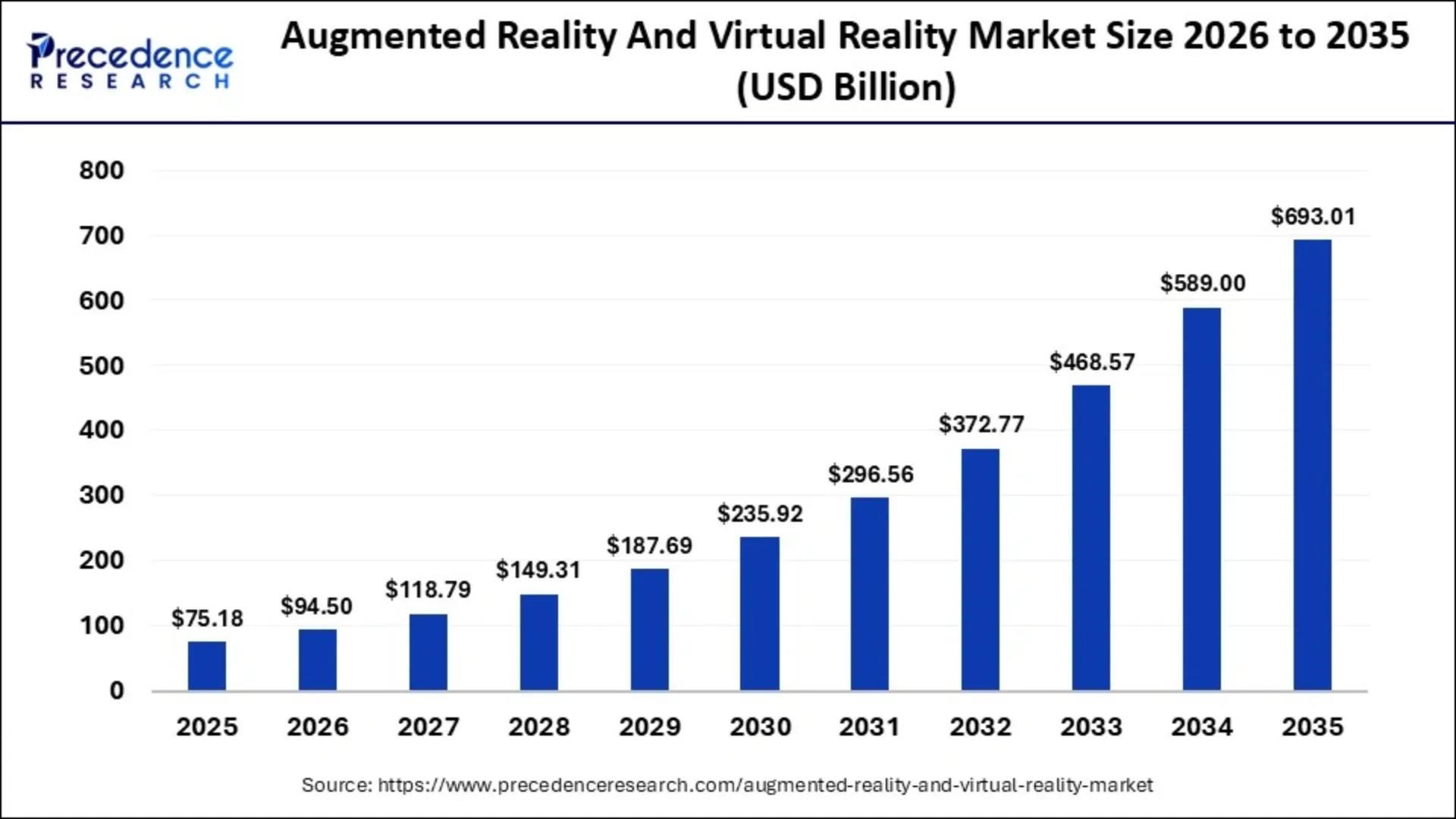
The world’s businesses have been investing a lot of resources in immersive technologies. The use of augmented reality and virtual reality is revolutionizing the way organizations train employees, visualize products, and create spatial computing applications that change the way they interact with clients.AR and VR are impacting the way that organizations learn, train, visualize products, and operate in the world of spatial computing, among other things. Indeed, the global AR and VR market is expected to reach more than $96 billion in 2029 and is being embraced by businesses across all industries at an astounding pace.
The problem is, not every AR company and VR company has the same skill set. Some specialize in enterprise XR solutions, and some specialize in healthcare simulations, retail experiences, training platforms, or even immersive marketing campaigns. With the wrong partner, such as the wrong software, your project can suffer from going over budget, late delivery, and ultimately solutions that will not provide business value.
This guide introduces the AR VR industry’s leading companies, the benefits of choosing the right company for AR VR development, specializations in the AR VR industry, and hints for businesses on how to pick the right AR VR development company for the right industry, budget, and vision.
What is Augmented Reality (AR)?
Augmented Reality (AR) is a technology that extends the real world with virtual objects. AR topography is not a substitute for reality, but it’s a supplement to it, having virtual elements such as images, animation, instructions, 3D models, and information right in front of a user in the physical world.
The experiences can be played on using a smartphone, tablet, smart glasses, and other connected devices. In addition to seeing the real world around them, AR users can now place layered digital content upon it too with the AR app.
In the present day, augmented reality is applied to a wide range of industries for product visualization, employee training, navigation, maintenance, healthcare, retail, education, and customer engagement.
How does Augmented Reality work?
AR combines cameras, sensors, computer vision, and computer algorithms to make sense of the environment in which the user is located and to precisely position virtual objects into the real world. This allows virtual objects to be seen as existing in their real-world environment.
Common Uses of Augmented Reality
- Virtual product try-ons
- Interactive shopping experiences
- Equipment maintenance guidance
- Medical visualization
- Educational learning tools
- Indoor and outdoor navigation
Benefits of Augmented Reality for Businesses
It is helpful for businesses to improve user engagement, reduce training costs, visualise products, and improve efficiency with such interactive user experiences.
What do AR Companies Do?
AR companies focus on creating augmented reality solutions that are developed and created to serve businesses and consumers. They fuse together the technologies of computer vision, 3D modeling, artificial intelligence, spatial computing, and mobile development to provide immersive experiences that make the real world better.
Through interactive, digital experiences, modern AR companies can aid organizations in boosting training, customer involvement, maintenance processes, product demonstrations, and decision-making.
Some of the widely used services by AR companies are as follows:
- AR application development
- WebAR experiences
- Virtual try-on solutions
- Product visualization tools
- Interactive training systems
- AR navigation applications
- Digital twin integrations
- Enterprise AR solutions
Together with businesses, AR companies can build solutions that boost efficiency and effectiveness, reduce costs, and offer improved experiences for staff and customers.
What is Virtual Reality (VR)?
VR, also known as virtual reality, is a technology that puts one person in a completely virtual environment. Virtual reality differs from augmented reality because in VR, the user will only see the virtual world on the computer screen, while in AR, the virtual content will be placed in the real world.
VR experiences are generally played via a headset like Meta Quest, Apple Vision Pro, HTC Vive, and PlayStation VR. The devices enable people to see around, move, and interact with virtual objects as though they were in actual space.
Virtual reality is found in a diverse range of training and education, simulation, collaboration, entertainment, games, healthcare, and industrial applications.
How Does Virtual Reality Work?
VR technology includes head-mounted displays, motion sensors and tracking systems, controllers, spatial sound, and sophisticated software to generate realistic digital scenarios that interact with the user based on his or her actions.
Common Uses of Virtual Reality
- Employee training simulations
- Medical training
- Virtual collaboration
- Product demonstrations
- Engineering simulations
- Gaming and entertainment
Benefits of Virtual Reality for Businesses
VR can be used in the workplace to give employees a safe environment in which they can learn quickly; training costs are reduced, not to mention enhancing knowledge retention, tapping into visualization capabilities to understand tough concepts, and even engaging in an immersive experience that may otherwise be difficult or costly to replicate in reality.
What do VR Companies Do?
VR companies create an immersive virtual environment by enabling the user to interact with the fully digital experience. These companies specialize in software development, 3D design, simulation technology, and user experience to handle a variety of materials and processes in numerous sectors.
The world’s top VR companies collaborate with organisations to create training platforms, virtual simulations, collaborative working spaces, education solutions, healthcare solutions, and interactive customer experiences.
Common services provided by VR companies are:
- VR application development
- Virtual training simulations
- Interactive 3D environments
- Enterprise VR solutions
- Digital twin visualization
- Virtual collaboration platforms
- Healthcare simulations
- Educational VR experiences
Businesses collaborate with VR Companies once they require a realistic, immersive, and scalable Learning experience that increases learning, engagement, and performance.
Looking to take AR/VR concepts into tangible business results? Learn the possibilities for your project.
Difference Between AR Companies and VR Companies
While both AR and VR companies are part of the immersive tech sector, they may operate on various types of experiences and business goals.
| Factor | AR Companies | VR Companies |
| Primary Technology | Augmented Reality (AR) | Virtual Reality (VR) |
| User Environment | Enhances the real world with digital content | Creates a fully immersive virtual environment |
| Devices Used | Smartphones, tablets, AR glasses, smart glasses | VR headsets, motion controllers, tracking systems |
| Core Technologies | ARKit, ARCore, WebAR, Vuforia, computer vision, spatial tracking | Unity, Unreal Engine, 3D simulation, motion tracking, spatial audio |
| User Experience | Users interact with digital content while remaining in the real world | Users are fully immersed inside a digital environment |
| Common Solutions | Virtual try-ons, product visualization, remote assistance, navigation, maintenance support | Training simulations, virtual classrooms, collaborative workspaces, immersive gaming |
| Enterprise Applications | Field service, retail, healthcare visualization, industrial maintenance | Workforce training, safety simulations, healthcare training, engineering reviews |
| Customer Applications | AR shopping experiences, interactive marketing, product demonstrations | Virtual showrooms, virtual tours, immersive brand experiences |
| Level of Immersion | Partial immersion | Full immersion |
| Industries Served | Retail, e-commerce, healthcare, manufacturing, logistics, construction | Education, healthcare, manufacturing, defense, aviation, entertainment |
| Primary Business Goal | Improve real-world tasks and interactions | Simulate environments, experiences, and training scenarios |
Augmented reality and virtual reality services are provided by many modern AR VR companies, and businesses can select a technology sweet spot for their goals and use cases.
What are AR/VR Platforms?
The technologies, frameworks, and environments used to create AR VR applications. From creating, testing, and optimizing to deploying AR/VR experiences over various devices and operating systems, these platforms can offer tools to developers.
AR VR companies build their customized solutions by taking advantage of AR/VR platforms, whereas the AR/VR platform acts as the backbone for creating solutions.
The most popular AR/VR platforms are:
- Unity
- Unreal Engine
- ARKit
- ARCore
- WebXR
- Vuforia
- VisionOS
These platforms implement capabilities such as multi-generational characteristics, spatial tracking, computer vision, physics simulation, as well as device compatibility. The landscape of immersive technologies is rapidly evolving, making AR/VR platforms even more indispensable in creating real-life, scalable, and immersive experiences that developers can create.
Why Businesses Hire AR/VR Development Companies?
The development of immersive applications requires a special skill set that is not necessarily found in an organisation. Partnering with experienced AR VR developers reduces the risk of development and allows businesses to release products faster, with AR VR knowledge and skills
There are several reasons why businesses employ AR VR companies:
- Expertise in AR / VR.
- Faster development and deployment time.
- Decreased costs of having an in-house XR team.
- Experience with a variety of industries.
- Advanced tools and technologies available.
- Continuous post-launch maintenance and support.
- The ability to scale up for future growth and expansion.
Partnering with the right AR/VR development company can lead to successful outcomes and also provide a faster ROI, especially if the virtual environment aims to enhance training, provide the buyer with an Augmented Reality experience or a Digital Twin for industrial activities, or an AI-powered virtual experience.
AR VR Industry Overview
From a niche of emerging technology to a force of digital transformation, the AR/VR industry has grown. Disciplines employed in the gaming industry, such as technology, are now being utilized in a completely new way to ensure that organizations can train, collaborate, visualize their products, engage their customers, and optimize their operations.
The global augmented reality and virtual reality market size was estimated to be more than $22 billion in 2024 and is expected to grow to more than $96 billion by 2029, according to Fortune Business Insights. This catalyzes rapid growth due to advancements in spatial computing, AI, cloud computing, and next-gen AR/VR technologies.
AR/VR Industry Snapshot
| Key Metric | Industry Insight |
| Market Growth | Projected to exceed $96 billion by 2029 |
| Fastest Growing Segment | Enterprise XR solutions |
| Key Growth Drivers | AI, spatial computing, digital twins |
| Major Adopters | Healthcare, manufacturing, education, retail |
| Emerging Trend | AI-powered immersive experiences |
There are many reasons for the uptake across industries:
- Growing need for more immersive employee training.
- Increase in the use of remote working technologies.
- Further Digital Twin adoption.
- Increase in investment in spatial computing.
- Enhanced AR/ VR hardware capabilities.
- Adopting AI in immersive settings.
Best AR VR Companies by Core Expertise
There are a lot of AR VR companies, but not everyone does the same thing. Some are enterprise trainers and workforce developers; others come in the field of immersive marketing, healthcare simulations, industrial visualization, product experiences, or interactive learning environments. These companies specialize in particular fields and have established a solid reputation for providing influential AR technology, VR technology, XR technology, and Immersive solutions to various industries.
| Company | Core Specialization |
| EuphoriaXR | AR/VR Training, Enterprise XR, AI-Powered Immersive Solutions |
| Groove Jones | Immersive Brand Experiences, Marketing, Product Visualization |
| Lucid Reality Labs | Enterprise XR, Healthcare, AI Simulations |
| Fair Worlds | Experience Design, Virtual Learning Environments |
| YORD Studio | XR Innovation, Interactive Experiences, Product Development |
| Takeaway Reality | Custom AR/VR Applications, Business Solutions |
| Osso VR | Medical Training, Surgical Simulation, Healthcare Education |
| Rock Paper Reality | Enterprise AR, Product Visualization, Interactive Experiences |
| ARLOOPA | AR Marketing, WebAR, Consumer Engagement |
| Treeview | Custom XR Development, Unity-Based Experiences |
| Bidon Games Studio | AR/VR Gaming, Interactive Simulations |
| ServReality | Enterprise AR/VR, Software Development, Simulations |
| Delta Reality | XR Innovation, Interactive Experiences, Brand Activations |
| 4Experience | VR Training, Enterprise Simulations, Education |
| tsukat | Cost-Effective XR Development, Healthcare, Education |
| Next/Now | Immersive Installations, Retail Experiences, Experiential Marketing |
| DigiTrends | Healthcare XR, Enterprise Solutions, Interactive Training |
| Gravity Jack | Computer Vision, Mobile AR, Interactive Applications |
| WE/AR Studio | Retail AR, Brand Engagement, Immersive Marketing |
| Monkhub Innovations | Affordable AR/VR Development, Gaming, Mobile Experiences |
Best AR VR Companies for Experience Design, Virtual Training & XR Innovation
Selecting the appropriate AR VR company isn’t merely about discovering a team that can build an app. It’s discovering a development partner with a grasp of immersive technology, user experience, 3D environments, device compatibility, and true business results. Below is a list of leading suppliers of AR, VR, and XR, custom AR, VR, simulation, training, and immersive solutions for world-class companies.
EuphoriaXR
Founded in: 2016
Hourly rate: $25 to $49 per hour
Employees: 50 to 249
Headquarters: Austin, Texas, KSA, UK
EuphoriaXR is a tech company that provides full-service augmented and virtual reality, AI, blockchain, metaverse development, and enterprise XR solutions. The company provides interactive digital experience-building solutions for Startups, businesses, schools, hospitals, and industrial organizations to boost engagement, learning, efficiency, and business performance.
EuphoriaXR is an AR development company, creating custom AR apps, WebAR experiences, product visualization tools, interactive marketing campaigns, digital twins, remote assistance, AR location-based experiences, and more. The company operates in various industries such as retail, healthcare, manufacturing, education, real estate, field service, etc.
In addition to augmented reality solutions, EuphoriaXR is a top VR development company, providing immersive solutions for training simulations, virtual classrooms, safety training, healthcare simulations, multiplayer virtual experiences, and enterprise collaboration software solutions. It has experience across several other major platforms like Meta Quest, HTC Vive, Apple Vision Pro, Pico, and WebXR, enabling businesses to deploy scalable and immersive solutions on multiple devices and ecosystems.
EuphoriaXR ranks among the most innovative virtual solutions and applies to every aspect of an organization’s training and development needs, engaging its employees in a new way by offering immersive, practical experiences and strengthening its immediate business goals.
Groove Jones
Founded in: 2015
Hourly rate: $100 to $149 per hour
Employees: 10 to 49
Headquarters: Dallas, Texas
Groove Jones is an award-winning, immersive technology studio focused on Augmented, Virtual, and Mixed Reality, interactive WebGL and AI experiences, brand experiences, and more. The brand collaborates with global companies to develop highly immersive digital interactions as a fusion of narration, technology, and design. The services they offer are AR marketing campaigns, virtual product demonstrations, AR interactive training apps, immersive interaction experiences, virtual events, and experiential marketing solutions. Groove Jones is well known for creating engaging and highly tech-immersive experiences for brands to connect with customers. It is widely used by retail, entertainment, consumer products, education, and enterprise training companies.
Lucid Reality Labs
Founded in: 2016
Hourly rate: $100 to $149 per hour
Employees: 10 to 49
Headquarters: Miami, Florida
Lucid Reality Labs is one of the most innovative AR VR companies focused on Enterprise applications, immersive learning, healthcare solutions, AI-Driven Simulations, digital twins, and Extended reality solutions. The company creates and creates complex XR platforms that assist organisations in enhancing employee training, operational effectiveness, and client interaction. It supports virtual reality simulations, application of augmented reality, mixed reality experiences, Health Care Training Systems, product visualization solutions, and enterprise collaboration platforms. Lucid Reality Labs is also regarded for its specific technique of melding immersive technology with artificial intelligence to offer viable solutions in organizational or large-scale healthcare, production, and education environments.
Fairworlds
Founded in: 1990
Employees: 50 to 249
Headquarters: United States
Fair Worlds is about fun, immersive, experiential learning, virtual learning, and digital story-making and learning solutions. The company’s primary task is to create interactive virtual environments that increase learning outcomes, interactions, and participation of users. It provides virtual campuses, learning simulations, immersive learning platforms, workforce development solutions, and custom XR experiences. Ideal for learning institutions, companies, and organizations seeking to make learning and development experiences with immersive technology useful. The company’s strategy involves applying instructional design theory along with the latest AR and VR technology to design very engaging digital environments.
YORD Studio
Founded in: 2019
Hourly rate: $100 to $149 per hour
Employees: 10 to 49
Headquarters: Prague, Czech Republic
YORD Studio is an award-winning, innovative generation organisation with knowledge in XR innovation, XR product development, synthetic intelligence, and immersive experiences. The organisation develops AR/VR/MR products that enable manufacturers to interact, teach, and communicate in fresh and modern ways. It offers services for XR product development, immersive education solutions, virtual showrooms, interactive visuals, virtual storytelling experiences, and AI-based packages. YORD Studio is renowned for its blend of creative flair and technical prowess, making it a top choice for companies looking for immersive experiences that deliver an ethical edge.YORD Studio is renowned for its imaginative and effective approach to visual design and technical excellence, creating a favorable choice for businesses in search of creative and strategically driven immersive experiences that provide an ethical advantage.
Takeaway Reality
Founded in: 2018
Hourly rate: $50 to $99 per hour
Employees: 10 to 49
Headquarters: London, England
Takeaway Reality specializes in the creation of customized augmented reality, virtual reality, and XR solutions for businesses across different fields. The company is dedicated to making abstract concepts come to life by developing real-world applications that solve real business problems. It’s used for AR applications, VR simulations, immersive training, virtual product demos, virtual interactive marketing campaigns, and enterprise XR. Takeaway Reality’s customers span the healthcare industry, education, manufacturing, real property, and retail sectors, in which they may be growing revolutionary solutions to assist in enhancing overall enterprise performance and engagement, and optimize procedures via immersive technology.
OssoVR
Founded in: 2016
Employees: 50 to 249
Headquarters: Los Angeles, California
Osso VR, a firm specializing in surgical instruction, healthcare education, and clinical skills, is among the most well-known virtual reality firms in the medical field. The company produces immersive VR training on platforms to enable the practice of procedures in realistic virtual environments before practicing with a healthcare professional in real-world environments. It is applied in hospitals, medical schools, manufacturers of medical devices, as well as in other healthcare organizations for better training results, risk reduction, and skill/training acquisition acceleration. One of Osso VR’s notable successes is the marriage of evidence-based learning methods and high-tech simulation technology to produce policies and procedures that have a positive impact and scale.
Rock Paper Reality
Founded in: 2017
Employees: 10 to 49
Headquarters: San Francisco, California
Rock Paper Reality is an AR development firm that produces a real AR experience that is interactive for business. The firm focuses on AR applications, WebAR experiences, product visualization, digital twins, and enterprise AR solutions. It provides efficient customer support services, engaging the working of the team in close association with the client to convert the concept into a user-friendly application that enhances client engagement and helps clients perform their business. Rock Paper Reality can be used in lots of exceptional industries, including retail, health and well-being, education, manufacturing, and tech. The company is famous for its technical skills in addition to its potential to create deployable and user-friendly stories, making sure that organizations can adopt AR solutions that have clear commercial enterprise value.
ARLoopa
Founded in: 2014
Employees: 50 to 249
Headquarters: Yerevan, Armenia
ARLOOPA is an augmented reality and virtual reality company dedicated to developing easily available AR and VR experiences for consumers, brands, education, and business. The company’s product line includes AR applications, mixed reality experiences, WebAR experiences, 3D visualization solutions, virtual try-on solutions, educational solutions, AR/VR content creation and storytelling, and interactive marketing campaigns. ARLOOPA’s technology provides organizations the ability to engage their audiences and create an immersive experience that spans from mobile to web. It has a wide range of knowledge in all areas of retail, entertainment, education, tourism, and advertising. It is a leading enterprise in developing AR technology at a handy and scalable level that might empower businesses to reach out to their customers in an innovative way.
Treeview
Founded in: 2016
Hourly rate: $100 to $149 per hour
Employees: 10 to 49
Headquarters: Montevideo, Uruguay
Treeview is a specialised AR VR development company that specialises in creating immersive applications, XR experiences, and interactive immersive 3D solutions. The company has deep expertise in Unity development, custom XR applications, product visualization, immersive experiences for enterprises, etc. Treeview caters to enterprises seeking solutions that offer both robust functionality and user-friendly experiences, particularly those with technical specifications. It offers augmented reality applications, virtual reality simulations, mixed reality solutions, digital twins, and interactive training environments. The company is especially renowned for its robust engineering skills and capacity to create complex XR initiatives throughout various sectors.
Bidon Games
Founded in: 2012
Employees: 50 to 249
Headquarters: Kyiv, Ukraine
Bidon Games Studio is a studio dedicated to interactive simulation, AR and VR, and interactive game development. The company creates interactive games, combining high-quality 3D environments, exciting activities, and realistic interaction with the player. It provides virtual reality games, training simulations, interactive educational applications, AR experiences, and custom projects. Industries, education, and entertainment firms that wish to reach, educate, and visualize to unlock immersive technologies’ power use Bidon Games Studio. With its rich experience in sports development, the organization is well-prepared to supply notable and technologically superior virtual experiences.
ServReality
Founded in: 2013
Hourly rate: $25 to $49 per hour
Employees: 50 to 249
Headquarters: Kyiv, Ukraine
ServReality is an AR / VR software development company proficient in game creation, simulations, and vivid programming. The company builds enterprise VR / AR solutions for players in the fields of health, manufacturing, education, retail, and entertainment. It provides enterprise XR solutions, VR simulation, AR experiences, 3D visualisation, software customization, 3D visualization, and development of a virtual world. With features like its support for immersive technologies, such as VR and AR, in software development, ServReality is a valuable ally for companies looking to get scalable solutions that can help them achieve long-term business prospects and digital transformation.
Delta Reality
Founded in: 2016
Hourly rate: $50 to $99 per hour
Employees: 10 to 49
Headquarters: Zagreb, Croatia
Delta Reality is an immersive experience development, augmented reality (AR), and virtual reality (VR) studio that specializes in all aspects of augmented reality, virtual reality, and immersive experiences. The company produces customized simulations, virtual experiences, interactive marketing campaigns, and enterprise XR solutions to enhance engagement and communication. Delta Reality services enterprises, brands, and educational institutions with very advanced immersive solutions. Its creative aptitude and premium technical presentation make it a great solution for businesses that would like something more than just conventional software development services and much more of an AR and VR experience.
4Experience

Founded in: 2015
Hourly rate: $25 to $49 per hour
Employees: 50 to 249
Headquarters: Bielsko-Biała, Poland
4Experience is a 3D studio developer of augmented reality, virtual reality, and mixed reality applications for industrial, education, and business customers. The company is focused on VR training simulations, VR environments, enterprise VR applications, and VR visualizations. It is typically employed for training employees, orientation, safety training, and streamlining operational procedures. 4Experience has established a solid track record of providing hands-on, immersive solutions that enable organisations to enhance employee performance and cut training expenses. The enterprise is quite outcome-focused and fee-advent-focused.
Tsukat
Founded in: 2017
Hourly rate: $25 to $49 per hour
Employees: 50 to 249
Headquarters: Miami, Florida
Tsukat is an immersive technology developer, creating augmented reality, virtual reality, and XR products and solutions for companies in the healthcare, education, media, retail, and enterprise industries. It offers applications for AR, VR training simulations, immersive learning platforms, interactive experiences, and enterprise visualization solutions. The company’s solution is specifically appealing for groups that would really like to create AR VR solutions that aren’t simply progressive but additionally cost-effective and scalable, and that they are able to rely upon their technically ready development team for a competitive price.
Next/Now
Founded in: 2011
Employees: 10 to 49
Headquarters: Chicago, Illinois
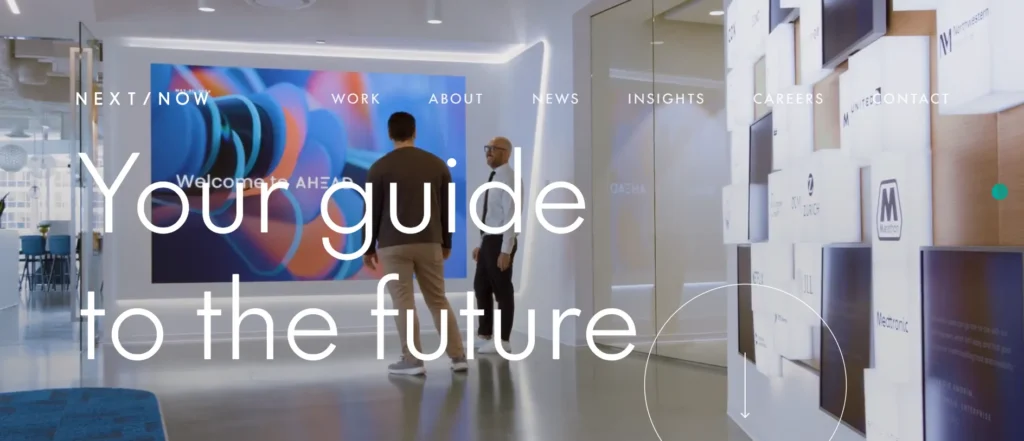
Next/Now is an experiential approach to tech fans that creates immersive installations, interactive reveals, digital reports, and large-scale digital activations. It’s a business enterprise that mixes AR, VR, projection mapping, interactive shows, and rising technologies to create memorable experiences for manufacturers, museums, occasions, and retail. It emphasizes target audience engagement and experiential advertising, assisting businesses in creating meaningful connections and capturing the target market’s interest through an immersive storytelling experience. Known for its attention to visual impact and its capability to merge physical and digital spaces, Next/Now is specifically cited for its focus on such reports.
Digi Trends
Founded in: 2010
Employees: 250 to 999
Headquarters: Karachi, Pakistan
DigiTrends is a digital transformation organisation that develops AR, VR, AI, and business enterprise technologies for healthcare, education, finance, and corporate scenarios. The core areas of focus of the organization include immersive education, visualization within the health enterprise, agency, and virtual engagement platforms. It provides AR/VR solutions that permit businesses to leverage advanced technology and bring better learning outcomes, customer engagement, and performance. DigiTrends offers enterprise digital transformation solutions and XR solutions that cater to the healthcare industry, which may be of interest for those seeking someone who can bring industry knowledge.
Gravity Jack
Founded in: 2009
Headquarters: Spokane, Washington
Gravity Jack is an innovator in augmented reality, virtual reality, computer vision, and custom software development. The company creates AR applications, mobile experiences, solutions for product visualization, interactive marketing campaigns, and enterprise XR technology. Gravity Jack has a proven history of assisting businesses in utilizing new technologies to enhance customer engagement and performance. This knowledge in computer vision and mobile AR makes it especially suited for companies that are looking to create more complex augmented reality experiences that will seamlessly fit into the real world and the users’ workflow.
WE/AR Studio
Founded in: 2018
Headquarters: London, England
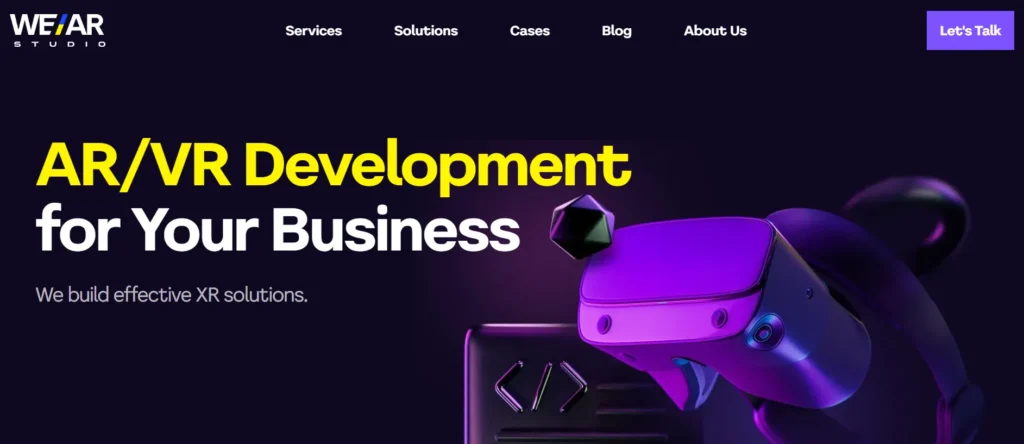
WE/AR Studio is an organisation specializing in augmented reality advertising, brand experiences, WebAR campaigns, and customer engagement. The company collaborates with brands, agencies, and companies to expand groundbreaking AR experiences, boosting awareness, engagement, and client interaction. It offers social AR apps, WebAR activations, marketing campaigns, product interactions, and immersive brand content. WE/AR Studio is particularly known for supporting businesses in using augmented reality within the marketing and storytelling journey to provide an unforgettable customer experience.
Monkhub Innovations
Founded in: 2017
Hourly rate: Less than $25 per hour
Employees: 50 to 249
Headquarters: New Delhi, India
Monkhub Innovations is an AR/VR and software development company, providing immersive app development, mobile solutions, gaming & enterprise tech products. The Business helps businesses execute AR, VR, AI, blockchain, new technologies, and so on with economical development services. It has a specialty in AR Apps, VR Simulations, interactive product experiences, gaming solutions, and digital platforms for Enterprises. For startups and small to medium-sized enterprises, Monkhub Innovations offers high-quality and affordable immersive tech solutions that easily scale with growing demands.
Best AR VR Hardware Development Companies
The companies that develop AR VR headsets are known as AR VR hardware development companies. The companies develop headsets, sensors, controllers, optics, chips, and spatial computing devices for augmented, virtual, and mixed reality applications.
Meta
Meta is one of the largest VR hardware companies and developers of the VR product line known as Meta Quest. The company has been a key contributor to the increasing availability of virtual reality with stand-alone headsets designed for gaming, business training, collaboration, fitness, and immersive entertainment. Meta remains dedicated to investing in new, creative immersive, AI, and mixed reality technologies.
Apple
Another new entrant in the space of immersive technology is Apple Vision Pro, a spatial computing visor featuring the merging of digital and real-world content. The current Apple technology, VisionOS, takes spatial computing to the next level, unlocking a new paradigm of productivity, collaboration, entertainment, and enterprise.
HTC Vive
HTC Vive is undoubtedly a well-known and familiar brand in terms of VR hardware for enterprise and consumer applications. The company creates enterprise XR solutions, tracking systems, as well as VR headsets, which are utilized in XR training, healthcare, engineering, manufacturing, education, and the simulation sector, and more. Another trait that makes HTC Vive unique is its high-quality immersive experiences and accurate motion tracking.
Sony Interactive Entertainment
PlayStation VR is a widely used virtual reality platform in the gaming industry that has a large VR community and is developed by Sony Interactive Entertainment. The firm’s VR devices feature best-in-class controllers, cool content, and immersive visuals, providing consumers with terrific VR experiences globally.
Varjo
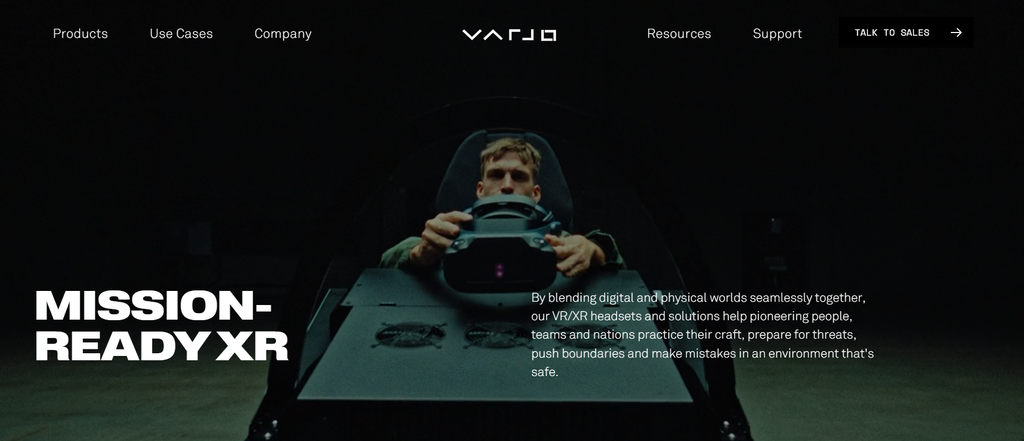
Varjo’s focus is on high-quality enterprise-grade M&E VR hardware. Its headsets are used in all areas of aviation, automotive design, engineering, military, and medical simulation training. Known for professional-grade applications and delivering industry-leading levels of visual fidelity and realistic environments for immersion, Varjo has made a name for itself.
Samsung
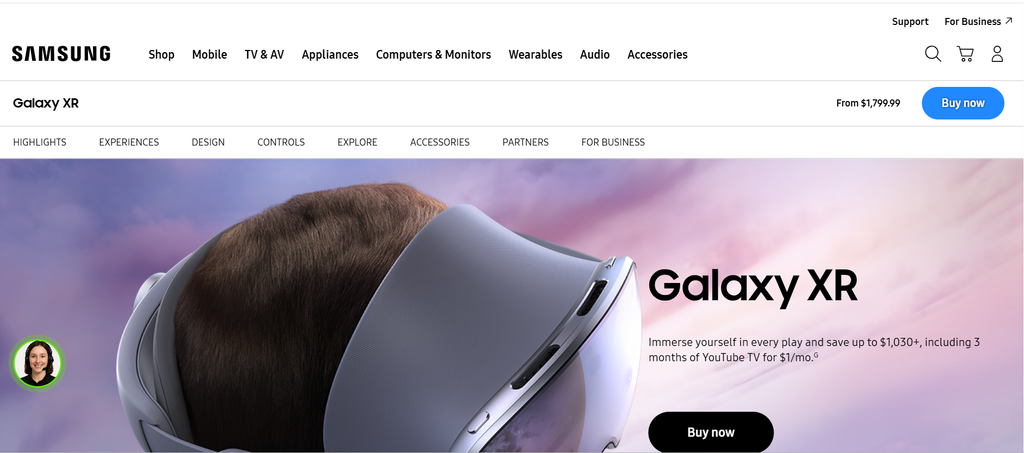
Samsung has actively engaged in immersive technology innovation in the following ways: research, display innovation, XR hardware development, and partnerships. The company’s advanced display technologies, processors, and hardware components will help to lead the way for the wider AR and VR ecosystem and further build its pipeline for potential future spatial computing applications.
PICO
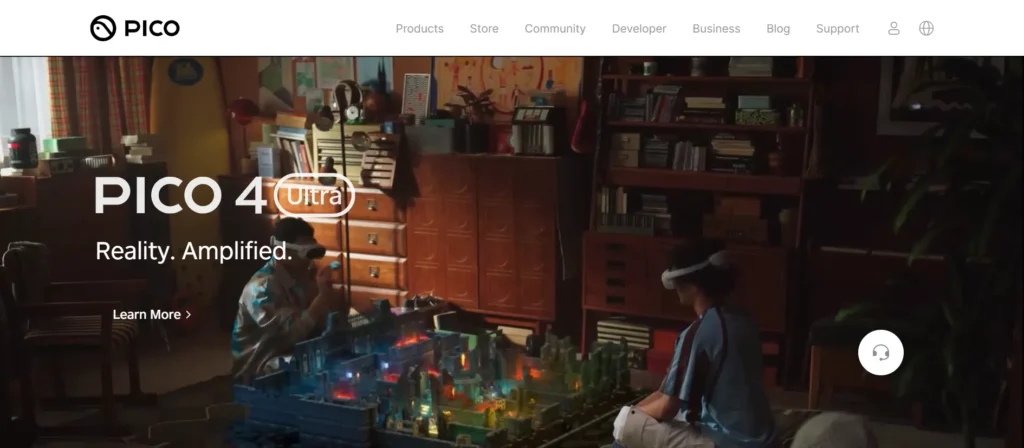
PICO is one of the top virtual reality equipment companies, offering enterprise-grade VR experiences and stand-alone VR headsets. The Company’s product line encompasses devices utilized for training, education, collaboration, health care, simulation, and entertainment. Equipped with low-cost, easy-to-use, and scalable VR headsets, PICO’s products have become a market hit in both the consumer and enterprise sectors.
Looking for Hardware-Optimized AR/VR Development?
EuphoriaXR develops custom AR and VR experiences tailored to leading devices such as Meta Quest, Apple Vision Pro, HTC Vive, PICO, and HoloLens, helping businesses maximize performance, compatibility, and user engagement.
Best AR VR Rental Service Companies
Not all companies have to buy AR and VR devices. AR VR rental service companies offer temporary access to AR VR headsets, accessories, technical assistance, setup, event management, and help in organizing conferences, trade shows, corporate training events, product launches, educational events, or marketing and activation events. These are the services that enable organizations to provide an immersive experience with lower initial hardware investment.
EuphoriaXR
Equipped with advanced hardware and software, EuphoriaXR offers a range of Rental VR and AR experiences for companies, events, exhibitions, conferences, training programmes, and experiential marketing. Top devices available include Meta Quest, Apple Vision Pro, HTC Vive, PICO, Microsoft HoloLens, and other devices enabled with immersive technologies. In addition to hiring equipment, EuphoriaXR can help set up applications, deploy content, help with tech setup, assist on-site, and create custom experiences. It is therefore perfectly suited for companies that would like to build interactive AR and VR applications, but do not wish to set up an infrastructure of permanent hardware.
Virtual Reality Rental
For corporate events, trade shows, education, product demos, and experiential marketing, Virtual Reality Rental offers VR equipment rentals. The company has a variety of VR headsets, accessories, plus support services in the form of events that help businesses in the cost-effective implementation of VR technology. It’s typically utilized in temporary arrangements for highlights, preparing for gatherings, exhibits, or interactive encounters where hardware procurement might not be economical.
AR/VR Companies by Industry
AR/VR companies can be present in various industries, as immersive technology can solve different problems. It can be used for training and simulations in healthcare. It can enhance the visualization of the product in retail. It can also improve the safety and ease of training and maintenance in manufacturing.
| Industry | Common AR VR Solutions |
| Healthcare and Medical | Surgical simulations, medical training, patient education, rehabilitation programs |
| Manufacturing and Industrial | Equipment training, safety simulations, maintenance guidance, digital twins |
| Retail and E-Commerce | Virtual try-ons, product visualization, AR shopping experiences, virtual stores |
| Education and Training | Virtual classrooms, immersive learning, skill development, employee onboarding |
| Architecture, Engineering, and Construction | Virtual walkthroughs, BIM visualization, project planning, design reviews |
| Marketing and Brand Engagement | Interactive campaigns, virtual events, experiential marketing, AR filters |
| Field Service and Maintenance | Remote assistance, repair guidance, technician training, equipment inspections |
| Gaming and Entertainment | VR games, AR experiences, virtual worlds, immersive storytelling |
AR VR Development Services Offered by Leading Companies
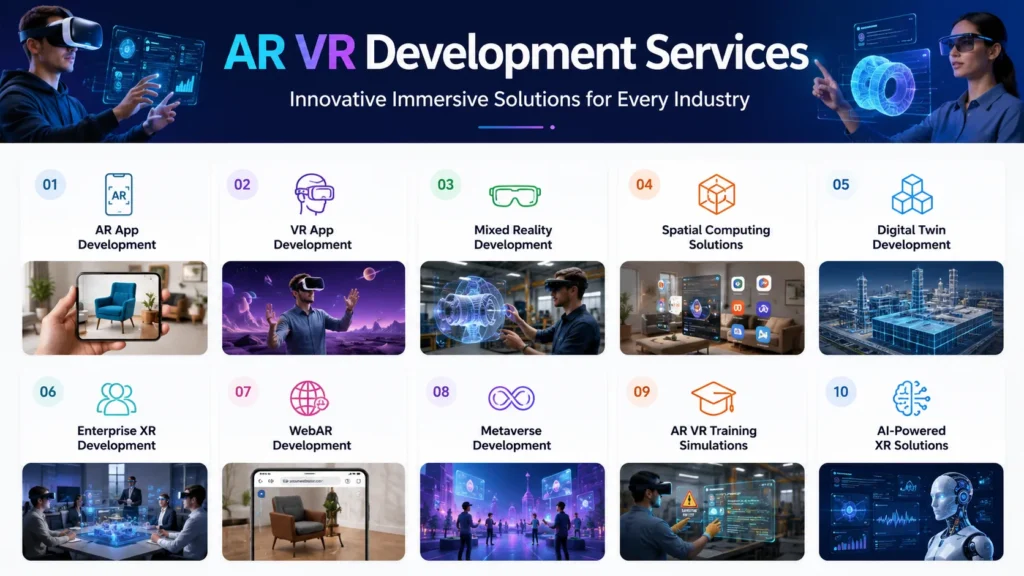
There are multiple leading AR VR businesses that offer a number of services to create a digital space, streamline business operations, and enhance customer experience. Depending on which service you opt for, you can usually discover a top AR or VR company, or a leading VR or AR service provider that will work on initiatives that incorporate augmented reality, virtual reality, blended reality, spatial VR, and XR enterprise environments.
AR App Development
AR app development refers to the process of developing an application that places virtual data on top of the real world using smartphones, tablets, smart glasses, and connected devices. Examples of AR applications include product visualization, interactive learning, remote assistance, and customer engagement for businesses. Mobile AR use is on the rise, and the number of companies investing in AR solutions to enhance user experiences while cutting down on operational costs is on the rise.
VR App Development
VR app development is about building an immersive virtual world where users can interact with the fully virtual world. VR apps are used for employee training, product demos, collaboration, simulation, and entertainment by organizations. VR experiences can engage users more effectively and retain knowledge for longer than traditional learning experiences.
Mixed Reality Development
Mixed reality is the merging of the real world and virtual world, so that virtual objects can interact naturally with the real world, in real space. This technology is readily employed in healthcare, manufacturing, engineering, and enterprise collaboration, allowing the user to interact with digital information while being aware of their surroundings.
Spatial Computing Solutions
Spatial computing helps digital content to perceive and react to physical spaces. The rise of spatial computing devices such as Apple’s Vision Pro has led to a surge in the demand for spatial computing applications across a variety of sectors. These are used in businesses to build interactive visualizations, all-in-one productivity applications, and interactive work environments.
Digital Twin Development
The digital twin is a virtual copy of a real asset, facility, or process. They permit groups to have real-time analytics to track overall performance, predict maintenance needs, and make informed choices. In the manufacturing, creation, logistics, and industrial sectors, digital twin technology is gaining in importance.
Enterprise XR Development
Enterprise XR solutions are customized for business applications. These apps integrate players and all sorts of immersive technology to improve employee training, communication, safety procedures, maintenance, and efficiency.
WebAR Development
Unlike a conventional AR app, WebAR may be used inside the browser without downloading and does not require a unique app. This complements usability and renders WebAR even more useful for advertising and marketing campaigns, product demonstrations, and customer engagement initiatives.
Metaverse Development
The implementation of the Metaverse involves developing a virtual space that is similar to the real world and enabling users to interact with it and learn and do business in it. The metaverse is still in its early stages, and numerous businesses are considering virtual environments for their ongoing digital transformation plans.
AR VR Training Simulations
One of the most effective uses of immersive technology continues to be training simulations. Through AR and VR simulations, employees can practise skills without being in real-world threat scenarios and without the costs.
AI-Powered XR Solutions
AI is the key to the future of immersive experience. These XR-powered AI tools can offer individual learning experiences, smart virtual assistants, predictive maintenance systems, and spiraling learning environments, adapting to the user’s interactions.
Benefits of Hiring AR/VR Companies
Software development abilities, 3D design, user experience, AI, and knowledge of new technologies are all required for creating immersive applications. Working with AR VR companies is a much more effective solution for most organizations than having an in-house XR team.
Access to Specialized Expertise
Creating AR and VR applications involves more than just software engineering skills. The main AR VR corporations have professionals in immersive design, 3D content creation, spatial computing, AI, and platform optimization. This understanding, in turn, enables the groups to overcome the common issues they face in development and to produce great results.
Faster Product Development
When it comes to faster project delivery, established AR VR development companies have streamlined workflows, and they have teams and methodologies that have been honed and tested. With no newly formed in-house teams, businesses can get their concept up and running before their internal teams can even be built, enabling them to deliver value earlier.
Cross-Platform AR/VR Solutions
In today’s modern experiences, it is often necessary to operate on multiple devices and operating systems. Professional development firms are aware of how to create solutions for mobile, VR headsets, mixed reality hardware, spatial computing platforms, and web-based environments, providing wider distribution and long-term scalability.
Reduced Development Risks
Immersive technology projects are likely to be more complex than they seem in the first place and will inevitably have some time-consuming elements that might lead to unexpected costs. Well-trained AR VR companies with extensive testing and validation measures early in the project and a deep knowledge of the platform can help reduce these risks.
Long-Term Support and Scalability
Successful AR and VR applications continue to develop after they are released. Professional development partners provide their client groups with an extended-term development relationship, value and upkeep, updates, compatibility, and scalability planning.
How to Choose the Right AR/VR Company?
Choosing the right AR VR development company can significantly impact a mission’s success. The perfect partner should not just have the technical skills but also the vision, goals, and ideas for the project itself.
Technical Expertise
The first criterion to consider is technical skills. Companies need to show their knowledge of the platforms that are most applicable to the project, as well as their knowledge of augmented reality, virtual reality, mixed reality, spatial computing, and the integration of AI. A strong technical base can result in improved performance, scalability, and user experience.
Portfolio and Case Studies
A company’s portfolio is an excellent indication of its quality of work. Past projects are evaluated to evaluate the technical prowess, creativity, industry experience, and capability in solving practical problems using immersive technologies.
Industry Experience
A project can greatly benefit from the expertise of the industry. Each industry, such as healthcare, manufacturing, education, retail, and construction has its own specific requirements, regulations, and expectations of its users. Organisations with industry experience may be able to offer less onboarding time and better suggestions.
Development Process
Predictable delivery of the project requires an organized development process. Typically, the best AR VR companies will adhere to a structured workflow that encompasses discovery, strategy, prototyping, development, testing, deployment, and post-launch support. This way, there is a lower risk and better communication during the life of the project.
Pricing Structure
The cost of development will depend on the complexity of development, platform requirements, and integration and support required. While price can be a decisive factor, developers are moving beyond just price to the value a development partner can offer, including expertise, quality, and support.
Post-Launch Support
Several immersive technology initiatives need to be continually updated after they have been implemented. Businesses should assess a company’s maintenance, performance improvement, software update, and technical support capabilities. Post-launch services are dependable with the intention of ensuring the solution’s effectiveness because the technology and enterprise needs change.
How Much Does AR/VR Development Cost in 2026?
Many factors affect the development cost of AR and VR, including the complexity of the undertaking, the form of platform, 3D property, integrations, interactions among the customers and the AR and VR experience, and the experience level of the development group. It is easier to create AR experiences that will run on a web browser than on enterprise XR platforms, VR simulations, or AI-based immersive experiences.
| Solution Type | Estimated Cost Range | Typical Timeline |
| WebAR Experiences | $5,000 to $25,000 | 2 to 8 weeks |
| Mobile AR Applications | $20,000 to $100,000+ | 2 to 6 months |
| Enterprise AR Solutions | $50,000 to $500,000+ | 3 to 12 months |
| VR Training Simulations | $30,000 to $250,000+ | 2 to 8 months |
| Full VR Applications | $50,000 to $300,000+ | 3 to 12 months |
| AI-Powered XR Experiences | $75,000 to $500,000+ | 4 to 12 months |
Key Technology Trends Driving AR VR Development in 2026
The AR and VR marketplace is on the verge of skyrocketing, with businesses seeking out extra compelling, smarter, more handy immersive experiences. The top AR VR companies are creating AR VR solutions in 2026, pushing by these trends.
AI Integration Expands XR Capabilities
AI is taking AR and VR to the next level. It enables to build customized learning journeys, intelligent virtual assistants, predictive simulations, auto-generated content, and adaptive learning environments that adapt to users’ actions.
Spatial Computing Growth
Spatial computing enables virtual content to comprehend and engage with real-world environments. As devices like the Apple Vision Pro gain attention, more businesses are interested in the possibility of spatial collaboration, training, visualization of products, and increased productivity in the workplace.
Apple Vision Pro and VisionOS Adoption
Apple Vision Pro has brought spatial computing into the mainstream of business discussions. Developers can create immersive productivity, education, entertainment, and enterprise apps in a new environment on VisionOS.
Digital Twin Expansion
There are several sectors where digital twins are being used more regularly in manufacturing, creation, logistics, healthcare, or business operations. They allow groups to simulate real assets, track their performance, anticipate problems, and make informed decisions.
Enterprise XR Transformation
Companies are finding that XR is the way forward for better team training, enabling remote employees, enhancing safety, and lowering operational expenses. The applications of AR and VR are now in use for onboarding, maintenance, collaboration, and high-risk training.
WebAR Growth
More and more people choose WebAR over downloading an app because they don’t have to install it. They can now open an AR experience straight in the browser. This allows for successful marketing applications, retail use, product demos, packaging campaigns, and e-commerce applications.
Multi-User Virtual Collaboration
Multi-user virtual collaboration enables meetings, training, design, and collaboration of teams within shared virtual environments. As businesses continue to embrace remote and hybrid working, this is increasingly becoming valuable.
Build engaging AR/VR solutions for your business.
Wrapping Up
AR VR companies are assisting businesses to move away from flat monitors and present immersive experiences for schooling, healthcare, manufacturing, retail, education, entertainment, and organizational operations. AR and VR principles can be transformed into viable solutions by means of the proper development partner that can enhance learning, engagement, productivity, decision-making, and foster long-term growth.
Frequently Asked Questions (FAQs)
Which is the best AR VR development company?
The top AR VR development company will be based on the project objective, budget, sector, and technical needs. For businesses seeking AR app development, VR simulations, enterprise XR, and immersive digital experiences, Lucid Reality Labs, Groove Jones, Saritasa, EuphoriaXR, YORD Studio, and Program-Ace are good options.
What are the largest AR companies?
Some of the largest AR companies are Apple, Meta, Google, Magic Leap, Qualcomm, Snap, and Magic Leap. These companies are spending a lot of resources on AR hardware, AR software, the spatial computing platform, developer tools, and immersive ecosystems.
How much do AR VR developers make in the US?
The salaries for AR VR developers in the USA vary from around $90,000 to $180,000 per year depending on the developer’s experience, location, technical skills, and the complexity of the work. High salaries can be achieved by senior XR engineers and Unity or Unreal Engine developers.
Is VR dying out?
VR is NOT dying out. Despite the changing tides of consumer hype, VR has seen growth across a range of enterprise training and healthcare, education, manufacturing, defense, gaming, and simulation applications. VR appears to be very relevant thanks to the improvements in hardware, AI, and spatial computing.
Who is the leader in VR technology?
Meta’s VR technology is one of the top ones, as it has launched the Meta Quest ecosystem. Some of the other big VR technology players include Apple, Sony, HTC Vive, Varjo, and Microsoft.